How Do You Winterize a Vacant Inherited House in Indiana?
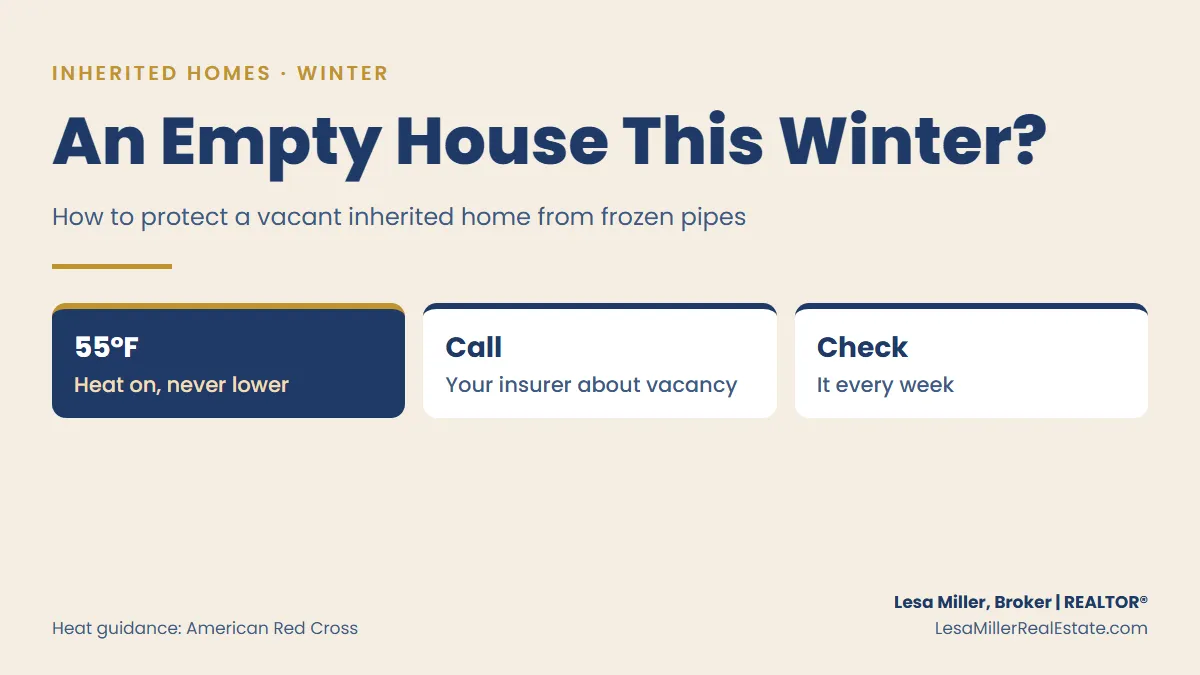
Keep the heat on, set no lower than 55°F, which is the American Red Cross guidance for a home left empty in cold weather. Then call the homeowners insurance company about the vacancy, protect the outdoor water lines, and have someone check the house often. An empty house can sit for weeks before anyone notices a burst pipe, and the damage gets worse every day it goes unseen.
Lesa Miller is a REALTOR® and broker in Bloomington, Indiana, who helps families in Bedford, Monroe County and the surrounding towns sell inherited homes. Here is how I'd protect one this winter while the family decides what's next.
Why does an empty house need extra care in winter?
When nobody lives in a house, nobody hears a drip, smells a furnace problem or sees water on the floor. A pipe that freezes and splits can run for days. That's water damage to floors, walls and the basement, and possibly an insurance problem on top of it.
What temperature should you leave a vacant house at?
The American Red Cross says that if you'll be away during cold weather, leave the heat on and set it no lower than 55°F. Keep it at the same setting day and night. Turning it down at night saves a little on the bill, but a burst pipe costs far more.
A few more steps from the Red Cross guidance:
Close the inside valves that feed the outdoor hose bibs, then open the outside spigots so the water can drain.
Remove, drain and store garden hoses.
Drain sprinkler supply lines following the manufacturer's directions.
Does homeowners insurance cover a vacant house?
It depends on the policy, so call the insurance company before winter sets in. The DC Department of Insurance, Securities and Banking explains that most policies cover a sudden burst pipe, but they usually require that heat be maintained in the home, and some set a minimum temperature even when the house is vacant. If it looks like the owner didn't take reasonable steps to prevent freezing, the damage may not be covered.
Many policies also treat a vacant house differently from an occupied one. Ask the agent three questions:
Does this policy cover the house while it's empty, and for how long?
Is there a minimum heat requirement or a required check schedule?
Do we need a vacant-home policy or an endorsement?
Get the answers in writing if you can.
Who is responsible for the house during probate?
That depends on how the estate is handled. If the estate is open in probate, the personal representative is usually the person responsible for protecting estate property, including the house. If there's no probate, the heirs typically decide together. If you're not sure who's responsible, ask the estate attorney. Either way, someone needs to own the job of keeping the heat on and the house checked.
What should the winter checklist look like?
Here's the list I'd start with:
Keep the utilities on. Gas or electric for the heat, and power for the furnace and any sump pump. Shutting the utilities off to save money is how pipes freeze.
Set the thermostat at 55°F or higher and leave it there.
Replace the furnace filter and consider having the furnace serviced before the cold weather.
Protect outdoor faucets and hoses as described above.
Check the house often. I suggest at least once a week, and after any hard freeze or big storm. Walk every room, look under sinks, check the basement and confirm the heat is running.
Make it look lived in. Keep the walks shoveled, collect the mail and use a light timer.
Keep a list of who to call: the insurer, a plumber, the utility companies and whoever checks the house.
Some families also choose to have a plumber fully winterize the house, which means shutting off the water and draining the system. That's a judgment call for the family, the insurer and the plumber, especially if the house will be shown to buyers.
Can you sell an inherited house in the winter?
Yes. Homes sell year-round in Bedford and Bloomington, and winter buyers are often serious ones. A warm, dry house with working utilities shows better and gives buyers fewer reasons to worry. My post Preparing Your Home for a Winter Listing covers how to get it ready.
If you're early in the process, Selling an Inherited Home in Bloomington, Indiana: What to Expect walks through the steps, and Inheriting a House With a Mortgage: What Happens Next explains what happens when there's still a loan on the house.
Frequently asked questions
What temperature should you leave a vacant house at in winter?
No lower than 55°F, according to the American Red Cross, and at the same setting day and night.
Does homeowners insurance cover frozen pipes in a vacant house?
It depends on the policy. Most policies require that heat be maintained, and many treat a vacant house differently, so call the insurer and ask how long the house is covered while empty.
How often should someone check a vacant house in winter?
I suggest at least once a week, and after any hard freeze. The insurer may have its own requirement, so ask.
Who takes care of an inherited house during probate?
If the estate is in probate, the personal representative usually is. If there's no probate, the heirs decide together. Ask the estate attorney if you're not sure.
Settling a loved one's home this winter? Call or text (812) 360-3863, or visit LesaMillerRealEstate.com/Links. Let's start with what has to happen first.
This post is general information, not legal or insurance advice. Talk to your insurance agent and estate attorney about your situation.