Inheriting a House With a Mortgage: What Happens Next
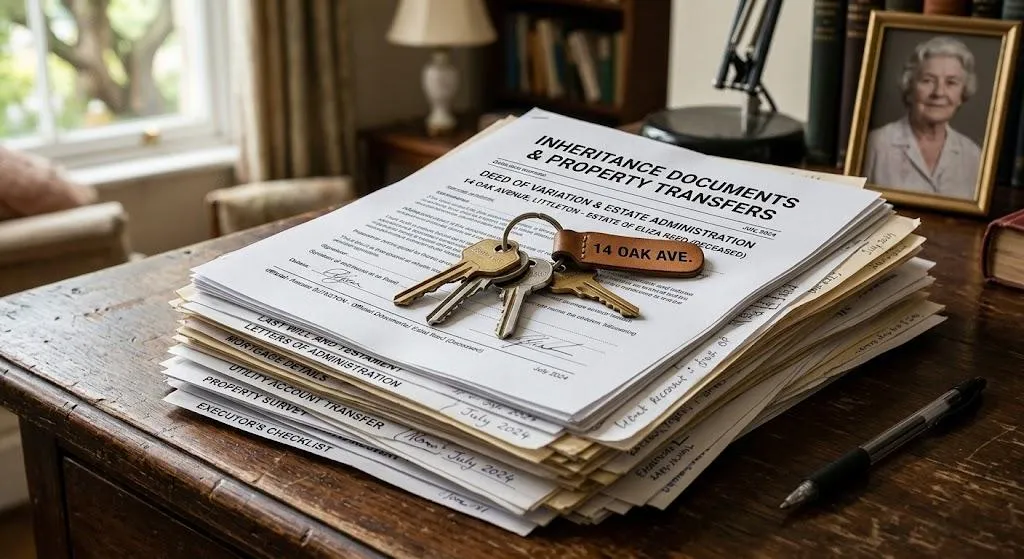
If you've inherited a home that still has a mortgage on it, the first thing I want you to know is, you're not automatically required to pay it off immediately, and you're not stuck with the original loan terms either.
The federal protection most heirs don't know exists
The federal Garn-St. Germain Depository Institutions Act of 1982 generally protects heirs in this situation. It prevents a lender from calling the full loan balance due just because ownership transferred through inheritance, as long as certain conditions are met: the loan covers a residential property with four or fewer units, the original borrower was a person rather than a business entity, the loan was already in place before their death, and the heir occupies the property as their primary residence. From there, you have real choices: keep making payments under the existing loan and keep the home, refinance it into your own name, or sell it and use the proceeds to pay off the balance.
This is closely related to the broader question of whether an inherited house has to go through probate in Indiana at all, since the probate timeline often runs alongside these mortgage decisions rather than before them.
How to decide what's actually right for you
The right choice depends on the home's value, the remaining loan balance, how the property is titled and honestly, whether you actually want to keep the property. If selling turns out to be the direction that makes sense, it helps to know what to actually expect when selling an inherited home in this market, since the process has a few extra steps compared to a standard sale.
I always recommend talking to a probate or estate attorney alongside whatever real estate decision you make. I can guide you on the property side, but the legal side needs its own expert, particularly around confirming you actually qualify for the Garn-St. Germain protections in your specific situation.
If you're navigating this right now, call or text (812) 360-3863, or visit LesaMillerRealEstate.com/Links. I'm happy to talk through the real estate piece with you.
Frequently Asked Questions
Do I have to refinance an inherited mortgage into my own name?
Not necessarily. Under the federal Garn-St. Germain Act, qualifying heirs can generally keep making payments under the existing loan terms without refinancing, as long as they occupy the home as their primary residence and the other conditions are met.
Can a lender demand full payment when a home is inherited?
Generally, no, if the situation qualifies under the Garn-St. Germain Act's exceptions. The law specifically prevents a due-on-sale clause from being triggered solely because a qualifying relative inherited the property from a deceased borrower.