Who Can Sign to Sell a House After Someone Dies in Indiana?
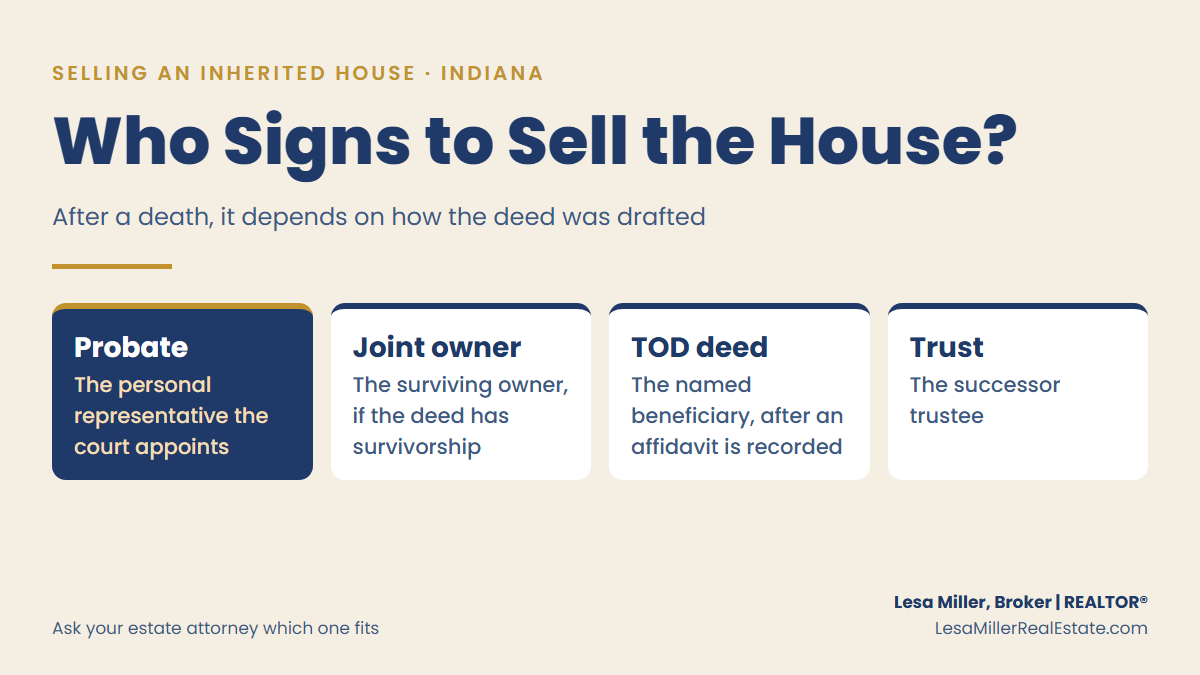
In Indiana, who can sign to sell a house after the owner dies depends on how the deed was drafted. It is usually one of four people: the personal representative of the estate, a surviving joint owner, a beneficiary named on a transfer on death deed, or the successor trustee of a trust.
Lesa Miller is a REALTOR® and broker in Bloomington, Indiana, who helps buyers and sellers in Bloomington, Bedford, Martinsville and the surrounding towns. When I sit down with a family after a loss, this is one of the first things we sort out, because it decides who signs the listing agreement, the purchase agreement and the deed at closing.
Start with the deed
The deed on file with the county recorder shows how the house was owned. That one page tells you which of the four situations below you're in. If you can't find a copy, the recorder's office in the county where the house sits can help, and so can the estate attorney or a title company.
1. The house was in one person's name: the personal representative signs
If the house was only in the name of the person who died, with no surviving owner and no beneficiary on the deed, it usually goes through probate. The court appoints a personal representative (often called the executor when there's a will) and gives that person written authority. The personal representative is the one who signs.
Until that appointment happens, nobody can sign to sell, even if everyone in the family agrees. In some estates the court also has to approve the sale itself. Your estate attorney will tell you which kind of estate you have.
2. Someone else was on the deed: the surviving owner may sign
If the deed named two owners with a right of survivorship, the surviving owner becomes the sole owner when the other dies. That person signs. The title company will usually want proof of the death recorded before closing.
3. There's a transfer on death deed: the named beneficiary signs
Indiana lets an owner record a transfer on death deed that names who gets the house. After the owner dies, the beneficiary files an affidavit with the county recorder, and then the beneficiary can sign. If the deed names more than one beneficiary, plan on each of them signing.
4. The house was in a trust: the successor trustee signs
If the house was deeded into a trust before the death, the trust's successor trustee usually signs, following what the trust document says.
Being family isn't the same as being able to sign
This is the part that surprises people. Being the oldest child, the one who lives closest, or the one named in the will doesn't give you the right to sign on its own. The buyer's title company has to see the right paperwork from the right person before it will close. If brothers and sisters don't agree on what to do, How Do You Sell an Inherited House When Siblings Disagree in Indiana? walks through it.
What to do first
Find the deed, then talk with an estate attorney about which situation fits and what paperwork is needed. While that's underway, I can help with the house itself: what it might sell for, what to fix and what to leave, and the timing. For how probate works and how a house can skip it, see Does an Inherited House Go Through Probate in Indiana?
This post is general information, not legal advice. Every estate is different, so talk with an Indiana estate attorney about yours.
Frequently asked questions
Can a family member sell a house after someone dies in Indiana?
Only if they have the legal authority to sign. That usually means being the court-appointed personal representative, a surviving joint owner, a beneficiary named on a transfer on death deed, or the successor trustee of a trust.
Can you sell a house before probate is finished in Indiana?
Often, yes, once the court has appointed a personal representative and given them written authority. In some estates the court must also approve the sale. An estate attorney can tell you which applies.
Who signs if there is a transfer on death deed?
The beneficiary named on the deed, after filing an affidavit with the county recorder. If more than one beneficiary is named, plan on each of them signing.
Settling a parent's house? Call or text (812) 360-3863, or visit LesaMillerRealEstate.com/Links.