Do You Have to Disclose a Death in a House When Selling in Indiana?
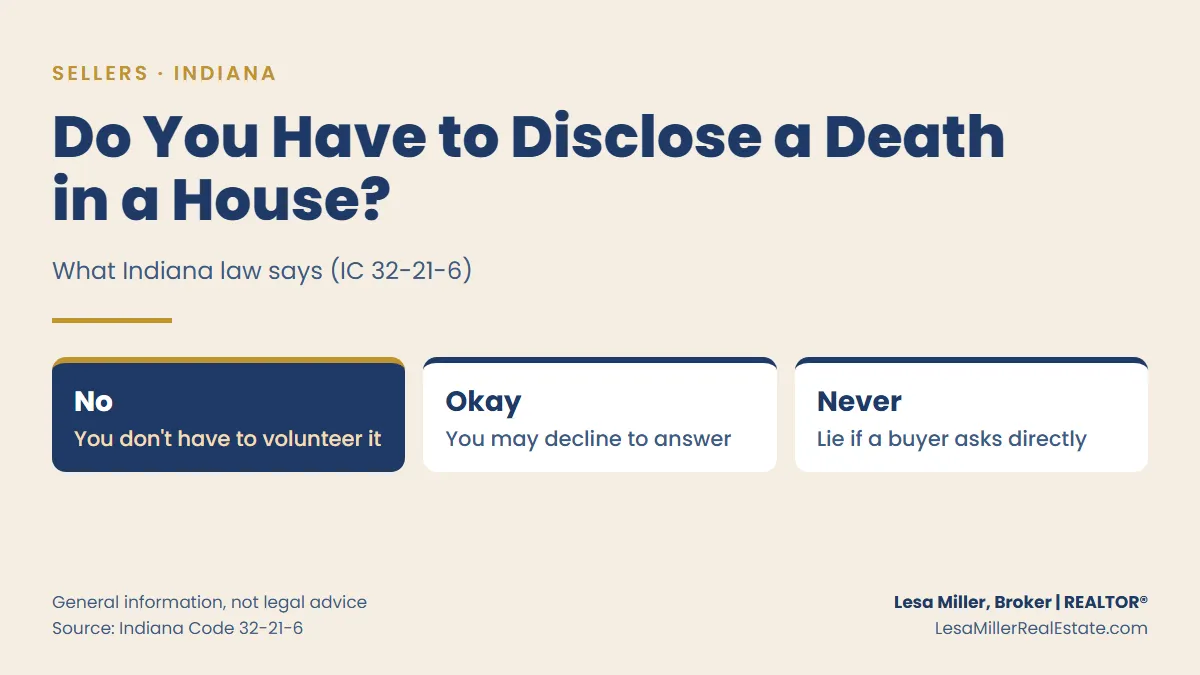
No, not on your own. Indiana law says a seller or agent doesn't have to tell a buyer that a property is "psychologically affected," and a death on the property is one of the things that counts. But if a buyer asks you directly, you can't lie.
Lesa Miller is a REALTOR® and broker in Bloomington, Indiana, who helps buyers and sellers in Bloomington, Bedford, Martinsville and the surrounding towns. Here's what the law says and what it means for your sale.
What is a "psychologically affected property"?
Indiana Code 32-21-6 covers real estate or a home for sale, rent or lease where one or more of these facts, or a reasonable suspicion of them, applies:
Someone died on the property.
The property was the site of a felony.
The property was the site of criminal organization activity.
The property was the site of a police officer firing a gun while on duty.
The property was the site of the illegal manufacture or distribution of a controlled substance.
The law doesn't mention ghosts. It covers what happened on a property.
What do you have to tell a buyer?
Nothing, on your own. The law says an owner or agent isn't required to disclose any knowledge of a psychologically affected property, and isn't liable for refusing to say that a property is one, or for refusing to give the details.
What if a buyer asks?
You can decline to answer. What you can't do is lie. The law says an owner or agent may not intentionally misrepresent a fact about a psychologically affected property when a buyer asks directly.
Before you list, decide with your attorney how you'll answer if someone asks.
What about the house's condition?
This law is about a property's history. A home's condition is a separate question, covered by Indiana's seller's disclosure form. Selling a House As-Is in Indiana: What You Still Must Disclose explains that part.
Selling a parent's home
If you're selling a house after a parent passed away there, you don't have to put that in the listing. Selling an Inherited Home in Bloomington, Indiana: What to Expect walks through the rest of the process, and What Mistakes Do Sellers Make When Listing a Home in Bloomington, Indiana? covers what to avoid.
Frequently asked questions
Do you have to disclose a death in a house in Indiana?
No. Indiana law doesn't require an owner or agent to volunteer that someone died on the property.
Can a seller lie if a buyer asks whether someone died there?
No. A seller or agent may decline to answer, but may not intentionally misrepresent a fact when a buyer asks directly.
Do you have to tell a buyer a house is haunted?
Indiana's law doesn't mention ghosts. It covers facts about what happened on the property, like a death or a felony.
Selling a house with a history? Call or text (812) 360-3863, or visit LesaMillerRealEstate.com/Links.
This post is general information, not legal advice. Talk to an attorney about your situation.