Do You Really Need 20% Down to Buy a Home in Indiana?
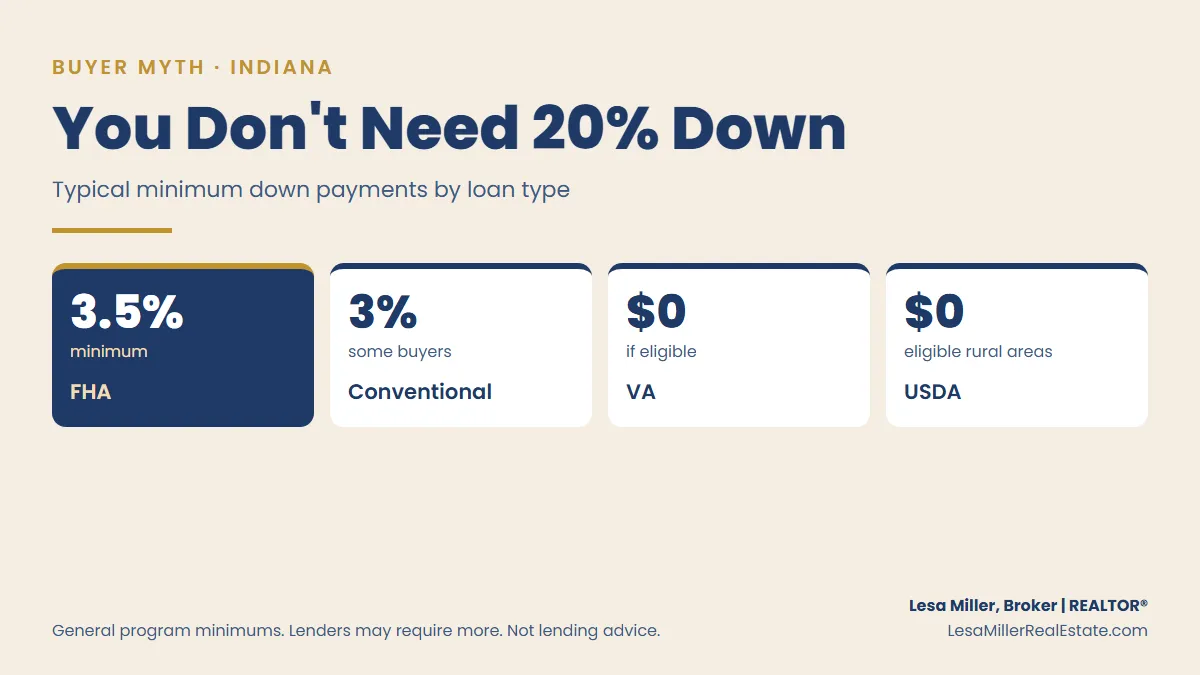
No. Most buyers don't put 20% down. Depending on the loan, the minimum can be 3.5% (FHA), 3% (some conventional loans), or nothing at all (VA and USDA, for buyers who qualify). Twenty percent is a target that saves you money, it's not an entry fee.
I hear the 20% myth from buyers in Bloomington, Bedford and Martinsville all the time, usually from people who have been waiting years to save a number they didn't need. Here is how it actually works.
Where does the 20% idea come from?
On a conventional loan, putting at least 20% down means you don't pay private mortgage insurance, often called PMI. That's a real savings, so 20% gets repeated as if it were a rule. It isn't. Below 20%, you pay mortgage insurance, and on a conventional loan it can usually be removed later as you build equity.
What do the main loan types require?
These are the general program minimums. Your lender may set stricter requirements.
FHA: 3.5% down with a credit score of 580 or higher. Scores from 500 to 579 generally need 10% down.
Conventional, 3% down: Fannie Mae's standard 97% loan requires at least one first-time buyer. Its HomeReady loan also allows 3% down for buyers at or below 80% of the area median income.
VA: No down payment, as long as the price isn't higher than the appraised value, and no private mortgage insurance, according to the Department of Veterans Affairs.
USDA: No down payment for eligible buyers in eligible rural areas, with household income up to 115% of the area median, according to USDA Rural Development. USDA's eligibility map checks a specific address.
The right loan depends on your credit, income, the property and your plans. A lender can tell you which ones fit.
Is there help with the down payment in Indiana?
Yes. The Indiana Housing and Community Development Authority (IHCDA) offers down payment assistance through participating lenders, including an option open to repeat buyers, not just first-timers. Amounts and rules change, so ask a participating lender what's available when you're ready. I covered this in more detail in Down Payment Assistance in Indiana: You Don't Have to Be a First-Time Buyer, and in First-Time Homebuyer Programs in Bloomington, Indiana.
What should you budget besides the down payment?
The down payment isn't the only cash you'll need. Plan for closing costs, an inspection, an appraisal, and a cushion for moving and the first repairs. Some loans allow help from the seller or gifts from family toward those costs. Your lender's estimate spells out the real number.
What's the first step?
Talk to a lender before you start touring. Getting pre-approved tells you what you can buy, which loans you qualify for and what you'd need in cash. My post Pre-Qualified vs. Pre-Approved explains the difference. Let's start with what has to happen first. The rest can wait.
Frequently asked questions
Do you need 20% down to buy a house in Indiana?
No. FHA loans can require as little as 3.5% down, some conventional loans 3%, and VA and USDA loans can require no down payment for buyers who qualify.
What does 20% down get you?
On a conventional loan, 20% down means no private mortgage insurance and a smaller loan. It's a way to save money, not a requirement.
Is down payment assistance only for first-time buyers in Indiana?
No. IHCDA offers down payment assistance through participating lenders, including an option for repeat buyers. Ask a participating lender what's currently available.
Ready to find out what you'd actually need? Call or text (812) 360-3863, or visit LesaMillerRealEstate.com/Links.
This post is general information, not lending or financial advice. Program rules change; confirm current requirements with a licensed lender.